

What Is a Navy Blazer? (Buttons, Fabric and How It Differs From a Navy Suit Jacket)
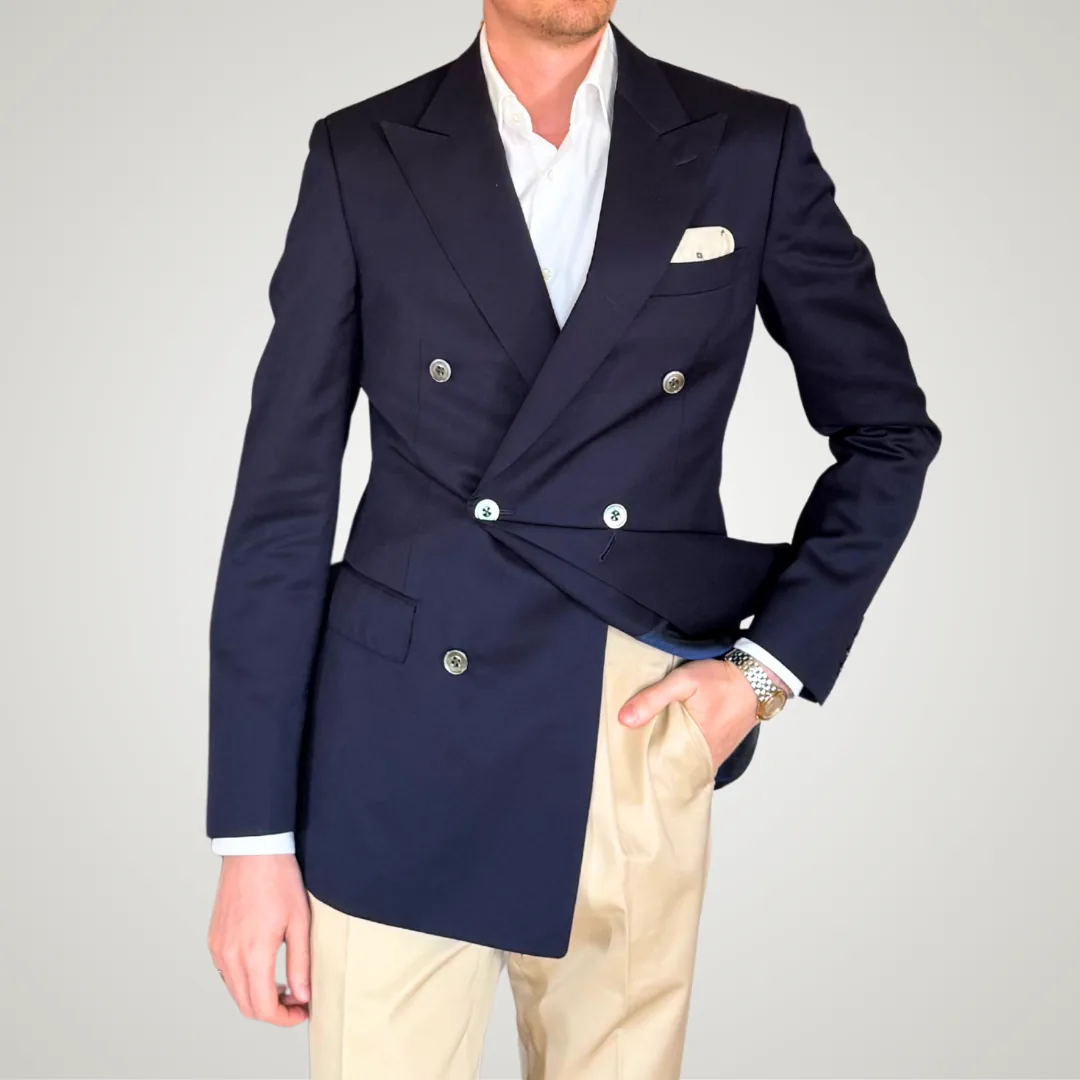
A navy blazer (also called a navy blue blazer or blue blazer) is a navy jacket designed to be worn on its own, with trousers in a different color or fabric, instead of as part of a suit. It traditionally has metal buttons, and today the cloth and the buttons are what tell it apart from a navy suit jacket: a textured fabric, contrasting buttons such as brass, horn or mother-of-pearl, or both.
That makes it one of the most useful jackets a man can own, because it sits between a suit and a casual jacket and can be dressed up with a tie and wool trousers or down with chinos and jeans. This guide answers the questions people ask most: what makes a jacket a navy blazer, how it differs from a navy suit jacket and a sport coat, whether it needs gold buttons, and which fabric, buttons and cut to choose.
Quick answers
| Question | Short answer |
|---|---|
| Is a navy blazer the same as a navy suit jacket? | No. A suit jacket is made to be worn with its matching trousers. A blazer is made to stand alone, usually with a more textured cloth and contrasting buttons |
| Does a navy blazer need gold buttons? | No. Brass or gilt is the most traditional choice, but dark or light horn, dark or white mother-of-pearl and dulled nickel all work |
| Navy blazer vs sport coat? | Most modern navy blazers are technically navy sport jackets, at the dressier end of that family: solid color, clean look |
| Best fabric? | A mid-weight cloth with a little texture, such as fresco, hopsack or high-twist wool |
| Single or double breasted? | Single breasted is the more versatile starting point. Double breasted is a bit more formal but easily worn casually |
| Can I wear a navy suit jacket as a blazer? | Yes, if you change the buttons to contrasting ones, and it works best if the cloth has some texture |
What makes a navy blazer a navy blazer?
Two things do most of the work: the fabric and the buttons. A suit jacket has a smooth worsted cloth and buttons that match it, so on its own it looks like half of something. A blazer reverses both: the cloth has some texture, the buttons contrast, and the jacket reads as a deliberate, separate piece.
You can use these two levers to move a jacket in either direction. If the cloth is clearly textured, quieter horn buttons are enough to make it a blazer. If the cloth is a smooth worsted twill, contrasting buttons do the job. The only combination that struggles is smooth cloth with matching buttons, which is a suit jacket whatever the label says. In practice it is more nuanced than people like to admit, and the two levers give you a lot of room.
Navy is the classic color because it is dark enough to look serious, light enough to be clearly blue, and neutral enough to go with grey, beige, white, brown and indigo. It is a deep blue, darker than royal or mid blue.
What is the difference between a navy blazer and a navy suit jacket?
A navy suit jacket is designed to be worn with matching navy trousers as a complete suit. Worn alone with different trousers, it looks like a broken suit: incomplete and unintentional. A navy blazer is designed as a standalone piece, so it looks intentional with almost any trousers.
| Navy blazer | Navy suit jacket | |
|---|---|---|
| Designed to be worn | On its own | With its matching trousers |
| Buttons | Contrasting: brass, horn, mother-of-pearl | Matching, usually dark horn or a color close to the cloth |
| Fabric | Often textured: hopsack, fresco, high twist, flannel | Often a smooth worsted |
| Worn with other trousers | Looks intentional | Looks like a broken suit, but see below: new buttons can change that |
It can also work the other way around, and this is the good thing about a navy suit jacket. If your navy suit trousers have worn out, you do not have to retire the jacket with them. Exchange the matching buttons for lighter horn, gilt, nickel or mother-of-pearl ones and you have turned your suit jacket into a navy blazer, which extends its life considerably. It will work best if the cloth has some texture, because a very smooth, fine worsted still reads as a suit even with different buttons.
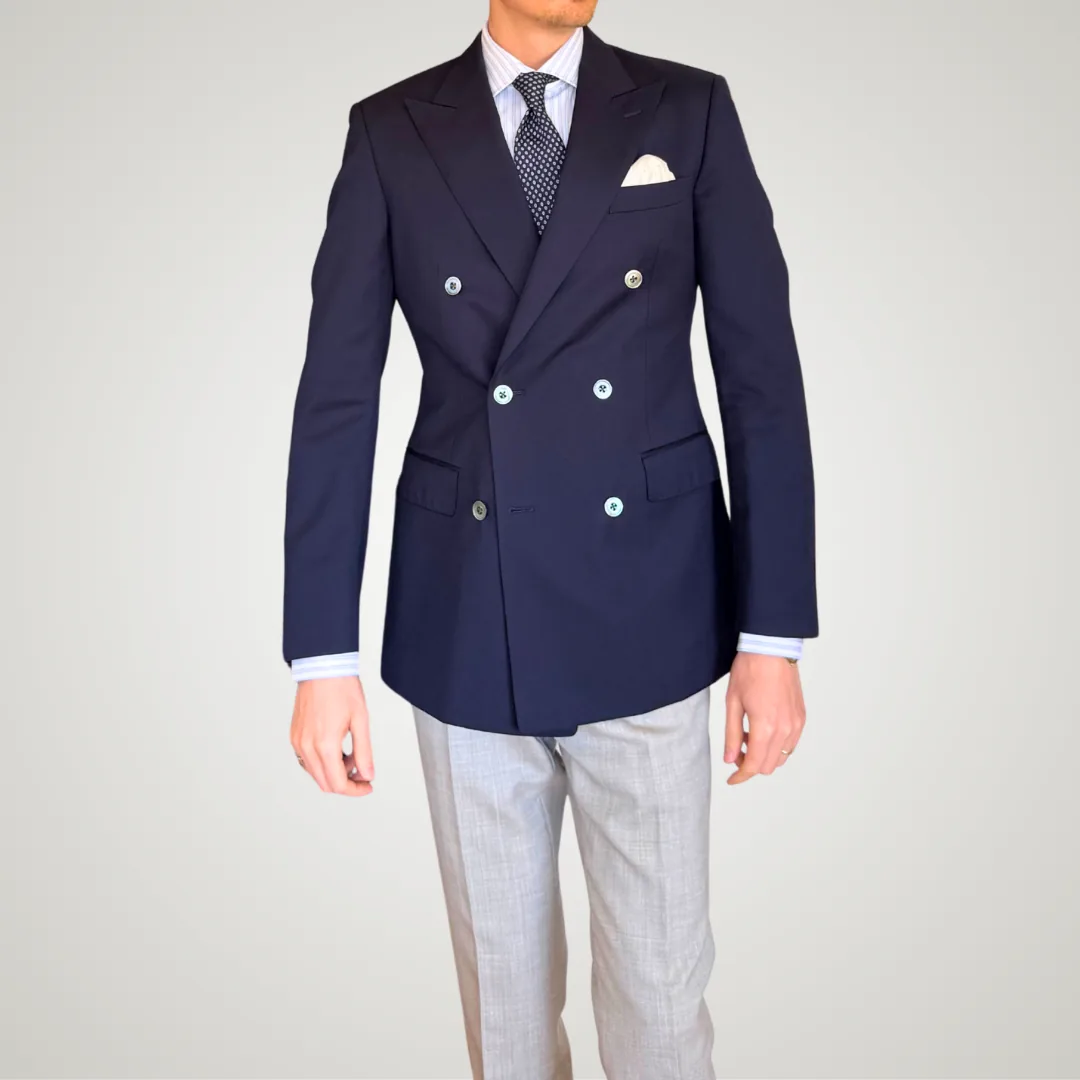
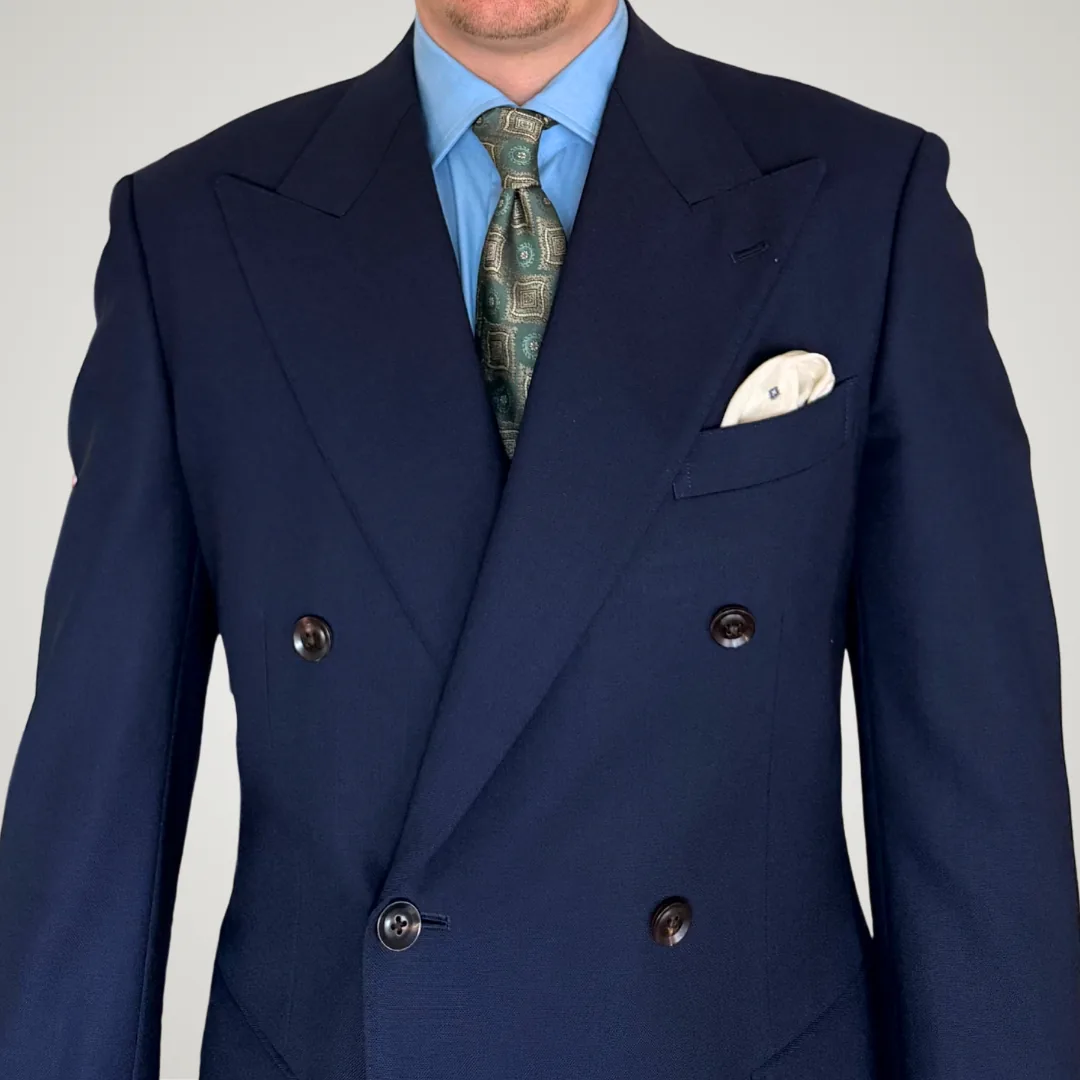
This double-breasted blazer is a fine worsted twill, a smooth cloth that could easily pass for a suit jacket. The dark mother-of-pearl buttons are what turn it into a blazer, and the light grey trousers do the rest.
If you are deciding between the two, a navy blazer is the more versatile purchase, since it can go with many trousers and a suit can only be worn as a suit. A grey suit is the better first complete suit, but the navy blazer is the more useful odd jacket. For that choice, see my video on whether to buy a navy or a grey suit first.
Does a navy blazer need gold buttons?
No. A navy blazer with gold (brass or gilt) buttons is the most traditional version, and the buttons carry a naval association. But the navy blazer grew out of rowing and sports blazers into a more versatile jacket that was not limited to sporty settings, so you have more freedom in choosing the buttons today.
The most plausible argument for contrasting buttons is that they separate the blazer from a navy suit jacket. Any of the options below does that, as long as you also pay attention to the cloth:
- Brass or gilt (gold): the classic. Plain, flat gilt buttons are the most traditional. Bright gold or silver can look nautical, which you may or may not want.
- Dulled nickel or silver: quieter than shiny gold, still traditional.
- Horn, medium to dark: subtle. The less contrast between buttons and cloth, the more texture the cloth should have, so that the jacket doesn't look like an orphaned suit jacket. Lighter horn gives a little more contrast without the maritime feel.
- Mother-of-pearl: white mother-of-pearl looks summery and casual, and it is a traditional match for lighter blue cloth. Dark or black mother-of-pearl is more understated and reads more formal. It also changes with the light. In a dimly lit room it looks almost as dark as navy or dark brown horn, while in sunlight it brightens and can look nearly as pale as white mother-of-pearl. That is why I like it on a navy blazer: it is subtle enough to look refined, and in the right light it shows enough contrast to signal blazer, not broken suit. It is my personal favorite.

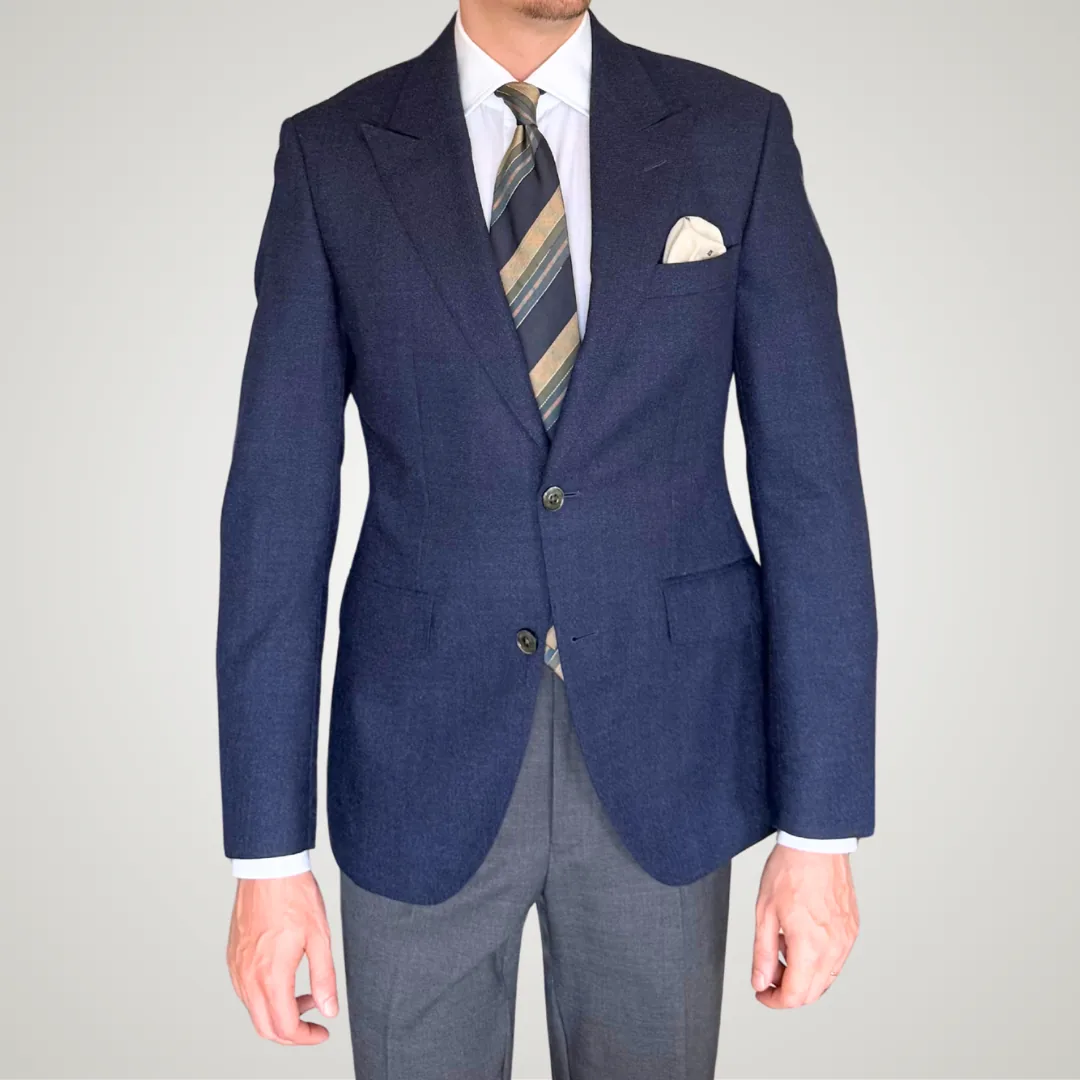
Both photos show the same half-milled fresco blazer, which has a soft, slightly fuzzy, flannel-like feel. In the first, the dark mother-of-pearl buttons on the cuffs catch the light and look pale. In the second, they stay quiet and almost blend into the cloth.
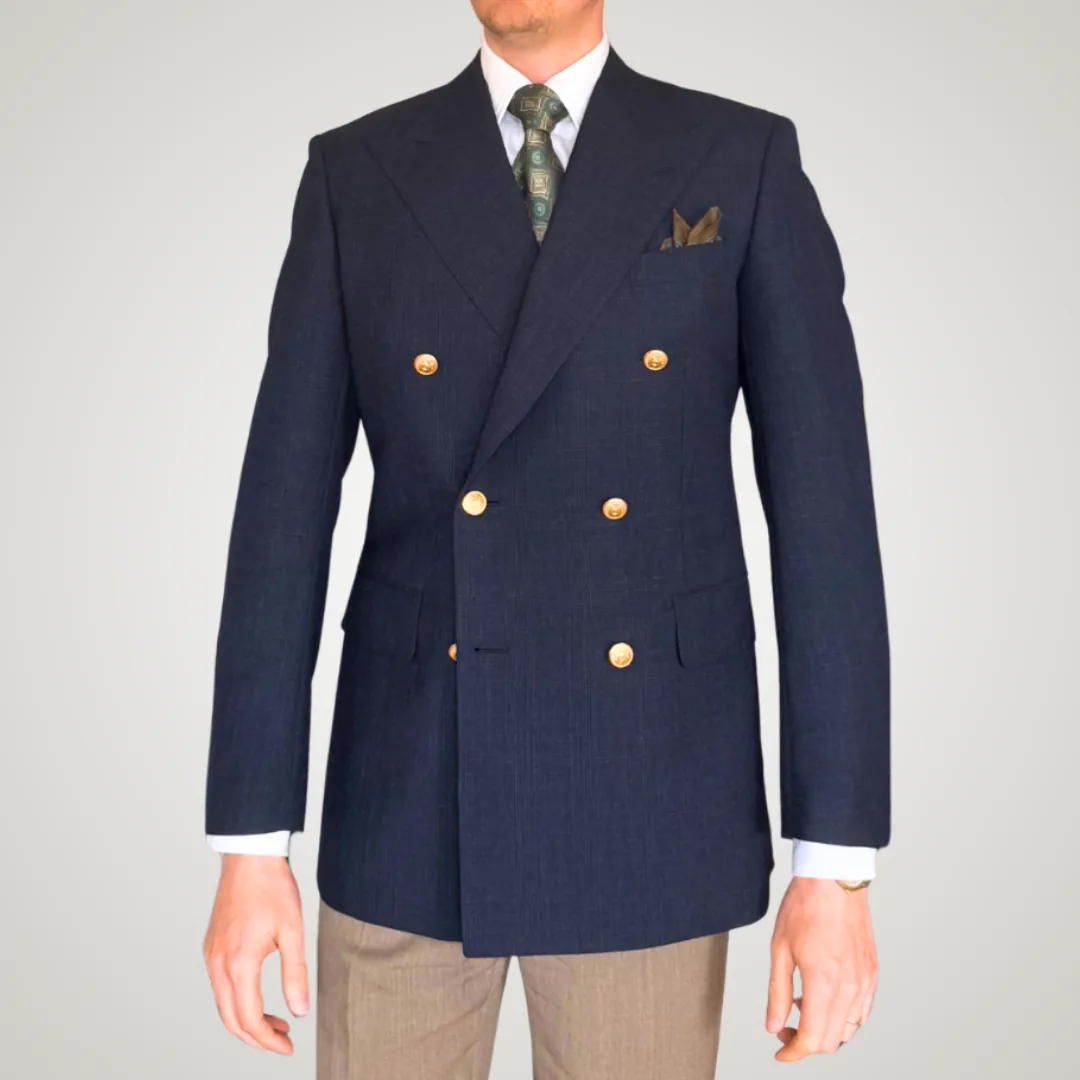
Two double-breasted versions for comparison. The first is a navy glen check fresco with gold gilt buttons from William Halstead, the classic navy blazer with gold buttons. The second is a fresco from the Finmeresco bunch by Smith Woollens with dark brown horn buttons, which has the same cut and a much quieter look.
What fabric is a navy blazer made of?
The general rule is that the less texture, the more formal the jacket. A smooth worsted twill (serge) is the traditional cloth and reads as the most formal. Textured cloths read as more casual and go naturally from smart wool trousers to chinos and even jeans:
- Hopsack: an open, basket-like weave that adds texture and breathes well.
- Fresco (high twist): an open weave made from tightly twisted yarns. The fibers spring back after creasing, so it barely wrinkles. That makes it a travel cloth and my all-time favorite for a blazer, because it is breathable and has just enough texture.
- Flannel, tweed, cashmere: warmer, softer and more casual, for colder months.
- Tropical wool, linen or linen blends: light and cool for summer.
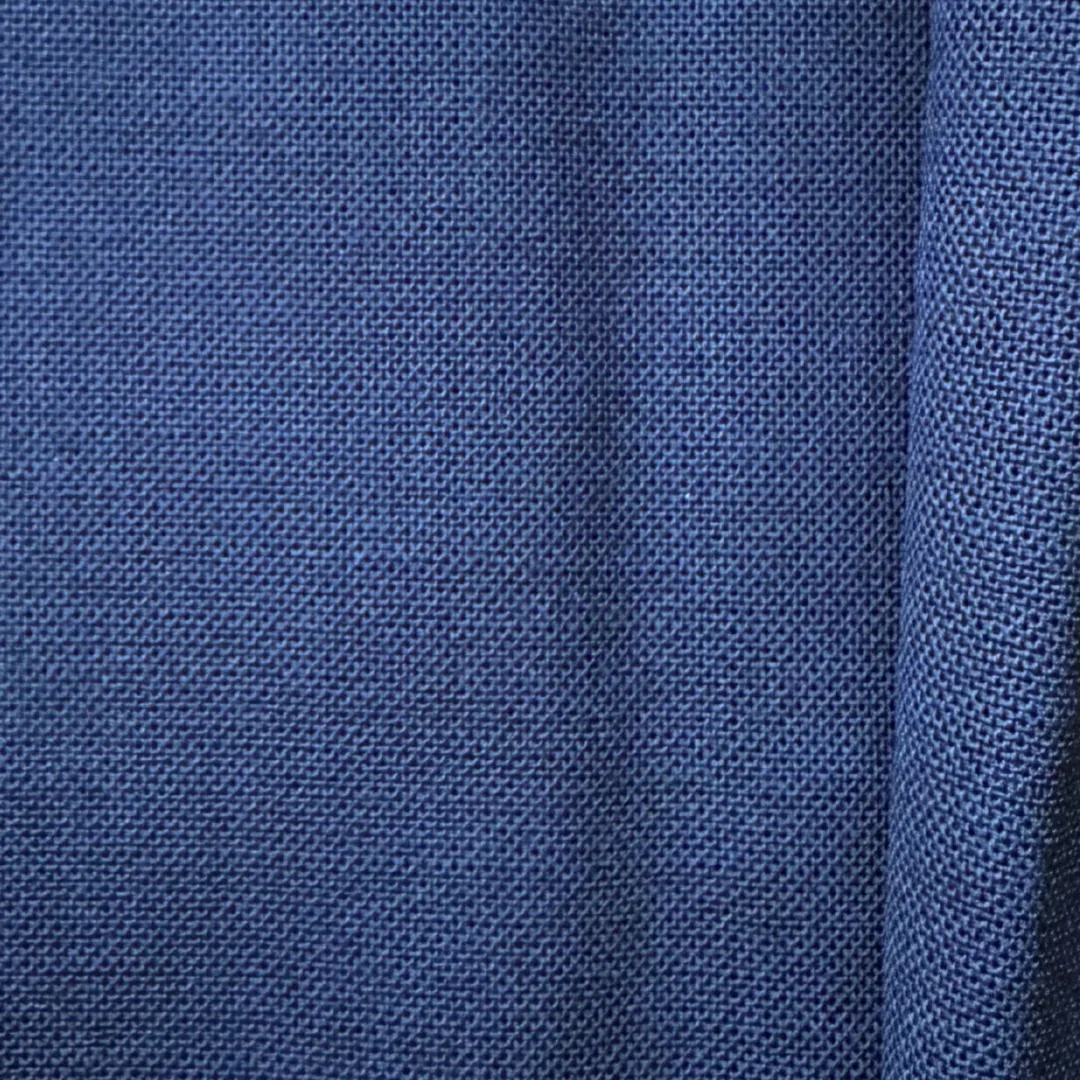
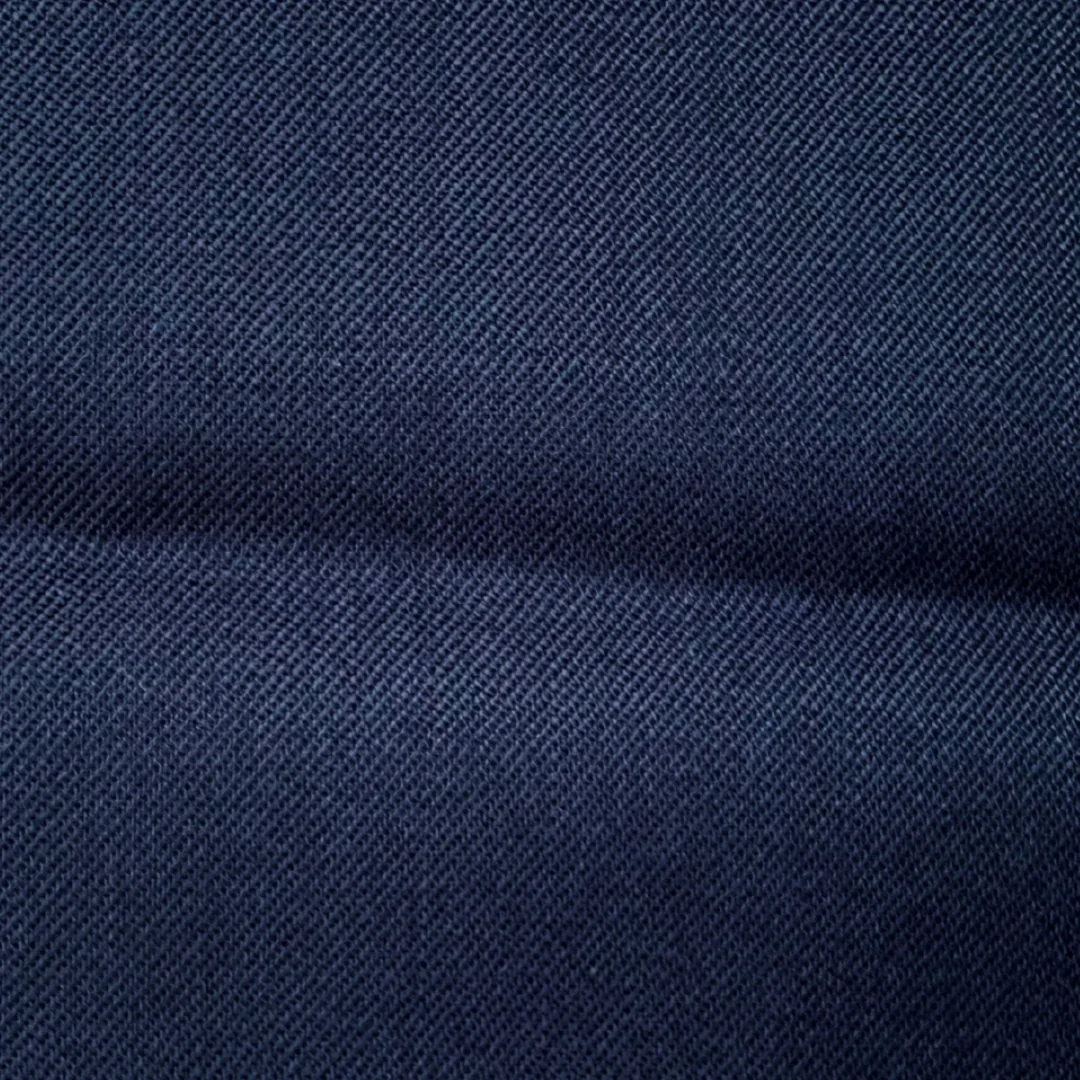
The first swatch is fresco: the second-darkest navy in the Finmeresco bunch by Smith Woollens, an open weave in 4-ply high-twist wool. The second is the finer worsted twill used for the double-breasted blazer with dark mother-of-pearl buttons above. Both are navy, but one is clearly textured and the other smooth, which is why they behave so differently.
If you can only buy one, choose a mid-weight cloth with a little texture. It gives you the widest range across seasons and settings. Cloth weight is quoted in ounces per yard or grams per metre:
| Season | Weight in oz | Weight in grams (about) |
|---|---|---|
| Summer, open weave | 7–9 oz | 220–280 g |
| Spring and fall, all-round | 10–12 oz | 310–370 g |
| Winter | 13–15 oz | 400–465 g |
My double-breasted navy fresco blazer is 390 g and works for about three seasons.
Single or double breasted?
A single-breasted navy blazer (one column of buttons) is the more versatile starting point: easier to wear open and easier to dress down. A double-breasted blazer (two columns of buttons) reads slightly more formal when buttoned, but it is still entirely wearable with jeans if the rest of the outfit is relaxed. I own several navy blazers and three of them are double breasted, because I find the silhouette more interesting and no less practical. Wearing one is a question of style preference, not confidence.
A few details change the formality of any blazer:
- Double breasted is usually more formal than single breasted.
- Peak lapels are more formal than notch lapels. Peak lapels on a single-breasted jacket are less common, but they add character and formality.
- Flap pockets are more formal than patch pockets.
- Smooth cloth is more formal than textured cloth.
- Trousers: darker for business, lighter for leisure.
These conventions have existed for decades, but nobody will stop you from wearing a flap-pocket blazer with peak lapels in a casual way. The details are tools, and the choice is yours.
Is a navy blazer the same as a sport coat?
Mostly, in modern usage. What most people call a navy blazer is technically a navy sport jacket, and the two overlap. The blazer sits at the dressier end of that family: a solid color, a clean look, and traditionally metal buttons, where a sport coat is more often patterned or heavily textured. A navy blazer is also more polished than a tweed jacket and less formal than a suit.
Where does the name "blazer" come from?
There are two popular origin stories, and historians do not agree on which is right:
- The boat club story. The name comes from the bright scarlet flannel jackets of the Lady Margaret Boat Club of St John's College, Cambridge (founded 1825), which were said to look ablaze on the water.
- The navy story. The name comes from HMS Blazer, whose captain had his crew kitted out in navy double-breasted jackets with brass buttons for a visit by Queen Victoria in 1837. This is where the gold buttons and the double-breasted cut are said to come from. They echo the Royal Navy's reefer jacket.
Menswear writer Alan Flusser dates the story of the modern blazer to the 1880s in English sporting clubs, especially cricket. Early blazers were striped and in club colors, some so vivid they seemed to blaze, and they were worn with flannel trousers and straw boaters. They were joined by versions inspired by the navy's reefer jacket, with gilt buttons and often a club badge on the breast pocket.
According to the same account, wealthy Americans took the jacket up in the 1920s, wearing navy blazers with white trousers, and by the late 1930s the plain navy blazer had become the leading odd jacket in America. It is what made it the bridge between the workday and the weekend: more polished than a tweed sports jacket, less formal than a suit.
Is a navy blazer worth owning?
For most men, yes. Few garments work across as many formality levels. You can wear it with a tie and wool trousers for a business meeting, or with an oxford shirt and jeans for a weekend dinner, and it is a safe choice for travel because you are rarely wrong whatever the dress code. Among all my jackets and suits, the navy blazer gets worn the most, so the cost per wear is very low, and it is worth buying the best construction you can afford.
That said, versatile does not mean you have to own it. If you naturally prefer light grey, stone, olive or brown, you don't need to force yourself into navy. The magic is not in the color itself but in two things: textured cloth, which reads as a sport jacket and not a broken suit, and a slightly muted color, which goes with more things. A textured jacket in your own color that follows both principles will serve you better than a navy blazer you never reach for.
Common questions
Keep going
- Trousers, shirts, shoes, ties and jeans for every dress code: What to Wear With a Navy Blazer
- Get your wardrobe rated for free to discover which outfits you can create and what's still missing: engine.thethoughtfulstyle.com
- Get my free 19-Piece Framework to build a coherent wardrobe with all the essentials you need: thoughtfulstyle.kit.com/19-piece-framework